High Cholesterol: Know Your Numbers

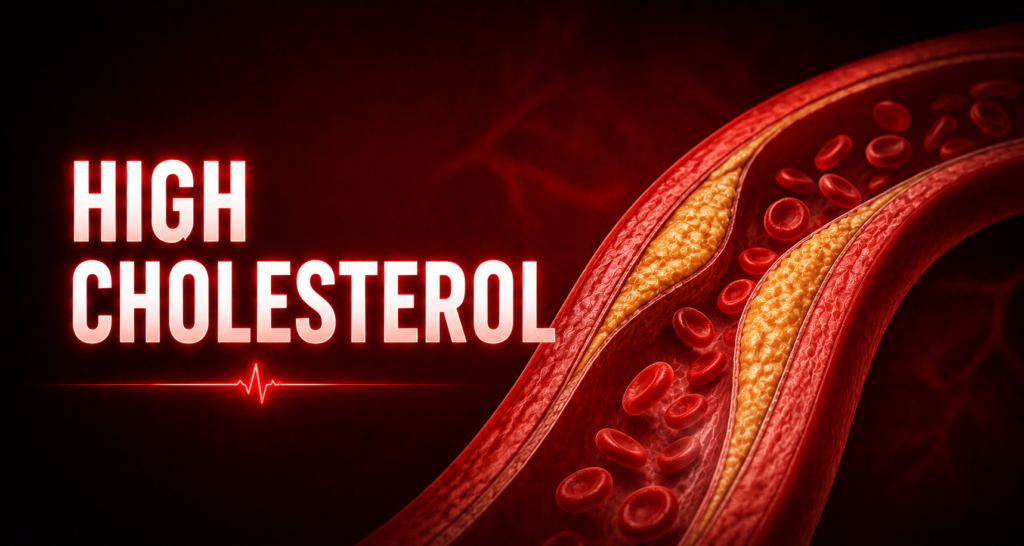
High cholesterol is a condition in which there is an excess of cholesterol in the blood. Over time, this cholesterol can build up inside the arteries, forming plaques that narrow or block blood flow. This increases the risk of heart disease, heart attacks, stroke, and peripheral artery disease.

Because high cholesterol usually causes no symptoms, many people are unaware they have it until complications develop.

Common Symptoms of High Cholesterol

High cholesterol itself typically does not cause symptoms.

It is often detected during routine blood tests. If left untreated, it can lead to complications such as:

• Chest pain (angina)
• Heart attack
• Stroke
• Reduced blood flow to the legs and other organs

Regular cholesterol screening is important, especially for individuals with a family history of heart disease or other risk factors.

Treatment of High Cholesterol

Treatment focuses on lowering cholesterol levels and reducing cardiovascular risk.

• Adopting a heart-healthy diet is essential
• Regular physical activity helps improve cholesterol levels
• Weight management plays an important role
• Medications may be prescribed when lifestyle changes alone are not sufficient
• Regular follow-up and blood tests help monitor progress

Early treatment can significantly reduce the risk of heart attack and stroke.

Can High Cholesterol Be Prevented?

Many cases of high cholesterol can be prevented or controlled through healthy lifestyle habits.

• Eat a diet low in saturated and trans fats
• Increase intake of fruits, vegetables, and whole grains
• Exercise regularly
• Maintain a healthy weight
• Avoid smoking and tobacco use
• Limit alcohol consumption
• Have regular health check-ups and cholesterol screenings

Key Message

High cholesterol is a silent risk factor for heart disease and stroke. Regular screening, healthy lifestyle choices, and timely treatment can help keep your arteries healthy and protect your heart.

Scroll to Top