Heart Valve Disease

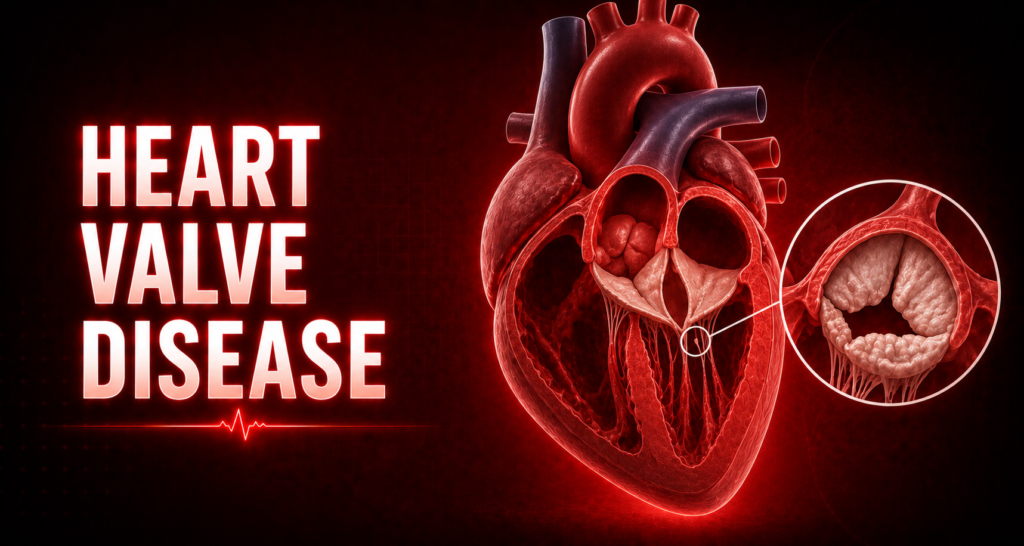
Heart Valve Disease occurs when one or more of the heart’s valves become damaged or diseased, affecting the normal flow of blood through the heart. Valves may become narrowed (stenosis), leaky (regurgitation), or fail to open and close properly.

If left untreated, heart valve disease can place extra strain on the heart and may eventually lead to heart failure or other complications.

Common Symptoms of Heart Valve Disease

Symptoms may develop gradually and can vary depending on the severity of the condition.

• Shortness of breath, especially during activity or when lying down
• Fatigue and reduced exercise tolerance
• Chest pain or discomfort
• Palpitations or irregular heartbeat
• Dizziness or fainting spells
• Swelling of the feet, ankles, or legs

Some people may have no symptoms in the early stages and are diagnosed during a routine medical examination.

Treatment of Heart Valve Disease

Treatment depends on the affected valve and the severity of the disease.

• Regular monitoring may be sufficient for mild cases
• Medications can help manage symptoms and reduce strain on the heart
• Lifestyle modifications and control of associated conditions are important
• In moderate to severe cases, valve repair or valve replacement procedures may be recommended

Early diagnosis and timely treatment can help preserve heart function and improve quality of life.

Can Heart Valve Disease Be Managed Successfully?

Many people with heart valve disease live healthy, active lives with proper care.

• Attend regular cardiac evaluations
• Take prescribed medications as directed
• Maintain a heart-healthy lifestyle
• Control blood pressure and other cardiovascular risk factors
• Seek medical attention if symptoms worsen

Key Message

Heart Valve Disease can affect the heart’s ability to pump blood efficiently, but early diagnosis and appropriate treatment can help prevent complications and maintain a healthy, active life.

Scroll to Top