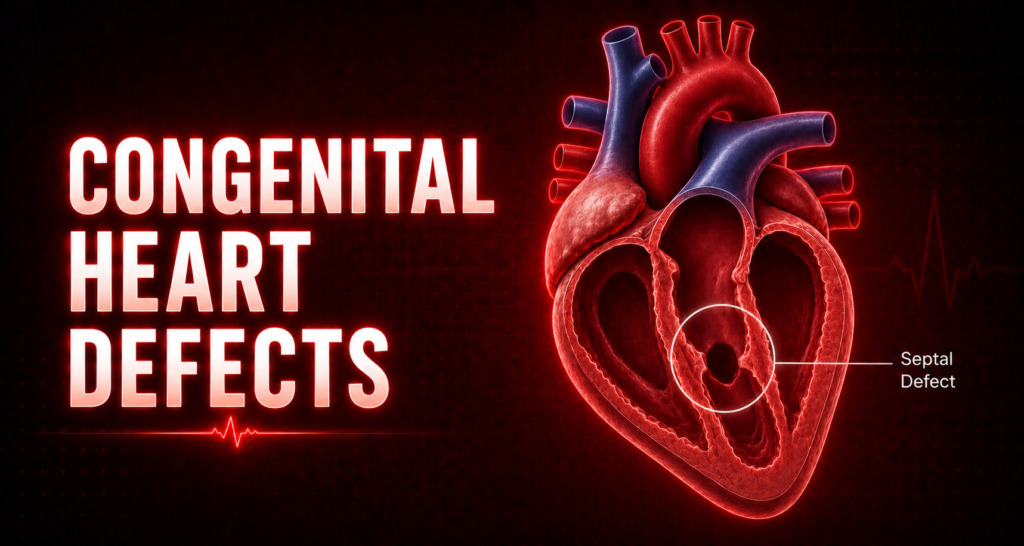
Congenital Heart Defects

Congenital Heart Defects (CHDs) are structural abnormalities of the heart that are present at birth. These defects may affect the heart walls, valves, or blood vessels and can alter the normal flow of blood through the heart.

Some congenital heart defects are mild and may not cause symptoms, while others can be more complex and require medical or surgical treatment.

Common Symptoms of Congenital Heart Defects

Symptoms vary depending on the type and severity of the defect.

• Shortness of breath during feeding, exercise, or activity
• Easy fatigue or poor growth in children
• Bluish discoloration of the lips or skin (cyanosis)
• Frequent respiratory infections
• Rapid heartbeat or palpitations
• Heart murmurs detected during a medical examination

In some cases, congenital heart defects may remain undiagnosed until adolescence or adulthood.

Treatment of Congenital Heart Defects

Treatment depends on the nature and severity of the defect.

• Mild defects may only require regular monitoring
• Medications may help manage symptoms and support heart function
• Catheter-based procedures can correct certain defects without major surgery
• Some conditions may require surgical repair or reconstruction

Advances in cardiac care have enabled most individuals with congenital heart defects to lead healthy and productive lives.

Can Congenital Heart Defects Be Managed Successfully?

With modern diagnosis and treatment, the outlook for many patients is excellent.

• Attend regular follow-up appointments with a cardiologist
• Take prescribed medications as directed
• Maintain a healthy lifestyle and stay physically active as advised
• Seek prompt medical attention for new or worsening symptoms

Key Message

Congenital Heart Defects are among the most common birth defects, but early diagnosis and appropriate treatment can help ensure a healthy and active life for many children and adults.

Scroll to Top