Cardiomyopathy: Understanding Heart Muscle Disease

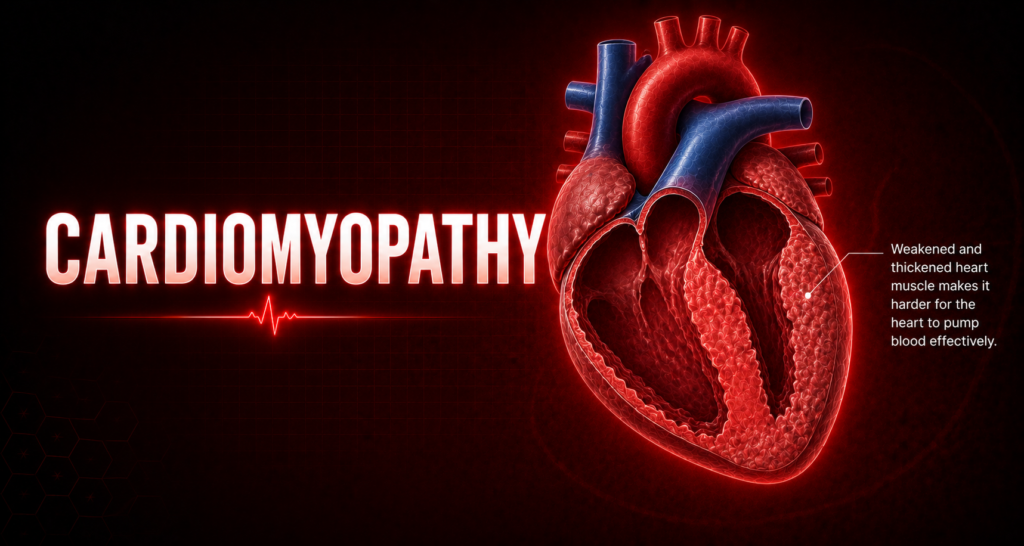
Cardiomyopathy is a disease of the heart muscle that affects the heart’s ability to pump blood effectively. The heart muscle may become enlarged, thickened, or weakened, making it harder for the heart to meet the body’s demands.

Cardiomyopathy can be inherited or develop due to conditions such as high blood pressure, heart disease, infections, or certain lifestyle factors. If left untreated, it may lead to heart failure, abnormal heart rhythms, or other complications.

Common Symptoms of Cardiomyopathy

Symptoms may develop gradually and can vary depending on the type and severity of the condition.

• Shortness of breath during activity or at rest
• Fatigue and reduced exercise capacity
• Swelling of the legs, ankles, or feet
• Palpitations or irregular heartbeat
• Chest pain or discomfort
• Dizziness, lightheadedness, or fainting

Some individuals may have no symptoms in the early stages of the disease.

Treatment of Cardiomyopathy

Treatment focuses on improving heart function, relieving symptoms, and preventing complications.

• Medications may help strengthen heart function and control symptoms
• Lifestyle modifications play an important role in management
• Treatment of underlying conditions such as high blood pressure is essential
• Certain patients may benefit from specialized devices such as pacemakers or implantable defibrillators
• In advanced cases, surgical treatment or heart transplantation may be considered

Early diagnosis and regular follow-up can help improve long-term outcomes.

Can Cardiomyopathy Be Managed Successfully?

Many people with cardiomyopathy can lead active and fulfilling lives with appropriate care.

• Follow prescribed treatment plans consistently
• Maintain a heart-healthy diet and lifestyle
• Exercise as recommended by your cardiologist
• Avoid smoking and excessive alcohol consumption
• Attend regular cardiac evaluations

Key Message

Cardiomyopathy is a serious but manageable heart condition. Early diagnosis, proper treatment, and ongoing care can help control symptoms, protect heart function, and improve quality of life.

Scroll to Top