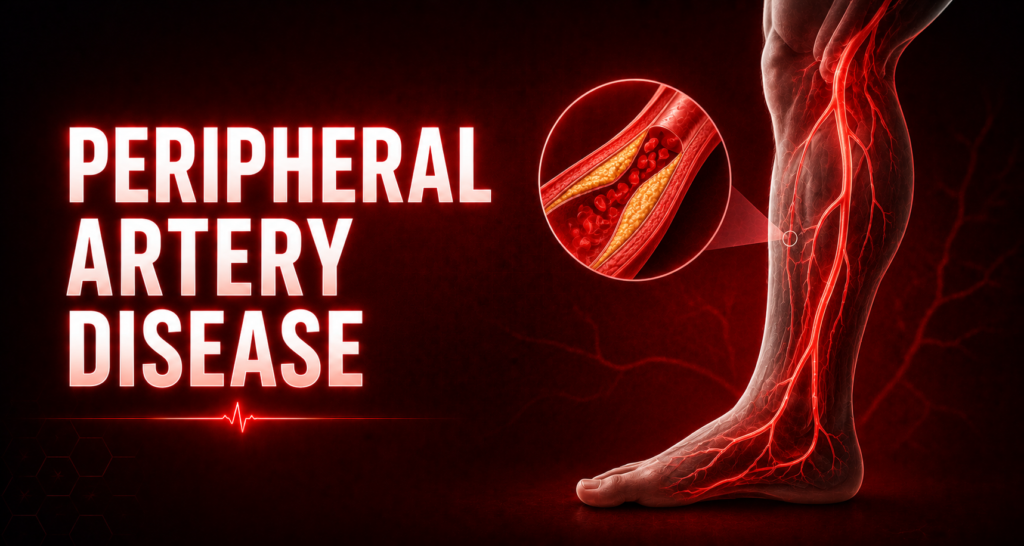
Peripheral Artery Disease: Poor Circulation to the Limbs

Peripheral Artery Disease (PAD) is a condition in which the arteries supplying blood to the legs, and sometimes the arms, become narrowed or blocked due to the buildup of fatty deposits (plaque). This reduces blood flow to the limbs and can lead to pain, difficulty walking, and, in severe cases, non-healing wounds or limb-threatening complications.

PAD is also an important warning sign of an increased risk of heart attack and stroke.

Common Symptoms of Peripheral Artery Disease

Symptoms may develop gradually and often worsen with activity.

• Leg pain or cramping while walking that improves with rest (claudication)
• Numbness or weakness in the legs
• Coldness in the lower leg or foot
• Slow-healing wounds or ulcers on the feet or toes
• Changes in skin color or hair loss on the legs
• Reduced or absent pulses in the feet

Some individuals may have PAD without noticeable symptoms.

Treatment of Peripheral Artery Disease

Many risk factors for PAD can be controlled through healthy lifestyle choices.

• Avoid smoking and tobacco use
• Exercise regularly
• Maintain healthy blood sugar, blood pressure, and cholesterol levels
• Eat a heart-healthy diet
• Maintain a healthy weight
• Attend regular medical check-ups, especially if you have diabetes or cardiovascular disease

Can Peripheral Artery Disease Be Prevented?

Many risk factors for CAD can be controlled through healthy lifestyle choices.

• Maintain healthy blood pressure, cholesterol, and blood sugar levels
• Avoid smoking and tobacco use
• Exercise regularly
• Eat a heart-healthy diet rich in fruits, vegetables, and whole grains
• Maintain a healthy weight
• Attend regular cardiac check-ups

Key Message

Peripheral Artery Disease is a common but often overlooked circulatory condition. Early recognition, lifestyle changes, and timely treatment can improve mobility, protect limb health, and reduce the risk of heart attack and stroke.

Scroll to Top