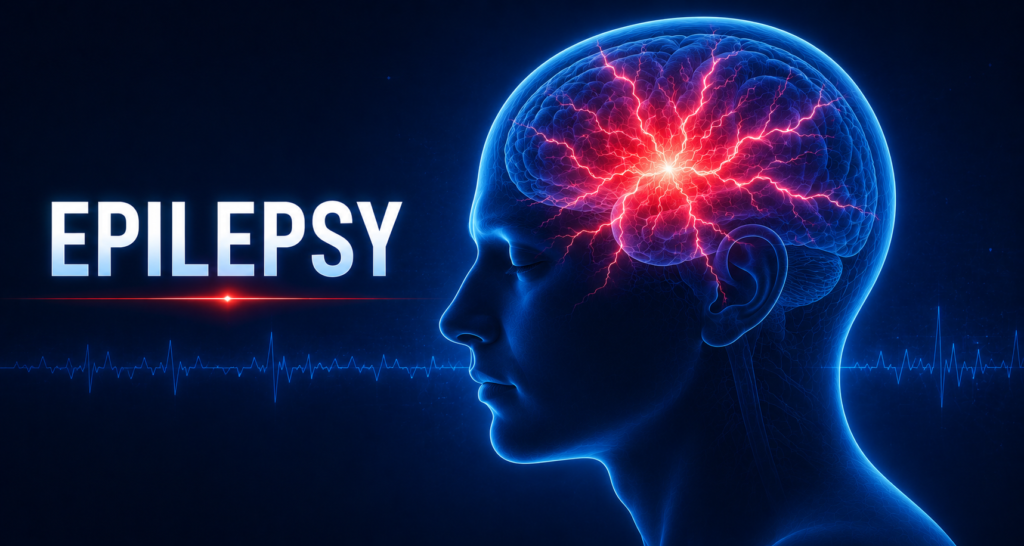
Epilepsy

Epilepsy is a neurological disorder characterized by recurrent, unprovoked seizures caused by abnormal electrical activity in the brain. A seizure can affect movement, awareness, behavior, sensations, or consciousness. While a single seizure does not necessarily mean a person has epilepsy, repeated seizures may require long-term evaluation and treatment.

Common Symptoms of Epilepsy

The symptoms of epilepsy depend on the type of seizure and the part of the brain involved.

Common symptoms may include:

• Sudden staring spells or loss of awareness
• Uncontrolled jerking movements of the arms and legs
• Temporary confusion or disorientation
• Loss of consciousness or awareness
• Unusual sensations, emotions, or visual disturbances before a seizure

Some individuals may experience a warning sign, known as an aura, before a seizure occurs.

Treatment of Epilepsy

Treatment aims to control seizures and help individuals lead a normal, active life.

• Anti-seizure medications are the most common and effective treatment.
• Regular follow-up and adherence to prescribed medication are essential.
• In selected cases, surgery or specialized therapies may be recommended.
• Identifying and avoiding seizure triggers can help reduce seizure frequency.

Many people with epilepsy achieve excellent seizure control with appropriate treatment.

Can Epilepsy Be Managed Successfully?

Although epilepsy is often a long-term condition, it can usually be managed effectively.

• Take medications exactly as prescribed
• Get adequate sleep and avoid sleep deprivation
• Limit alcohol consumption and avoid recreational drugs
• Manage stress and maintain a healthy lifestyle
• Attend regular medical follow-ups

Key Message

Epilepsy is a manageable neurological condition. With proper diagnosis, treatment, and support, most individuals with epilepsy can lead healthy, productive, and fulfilling lives.

Scroll to Top