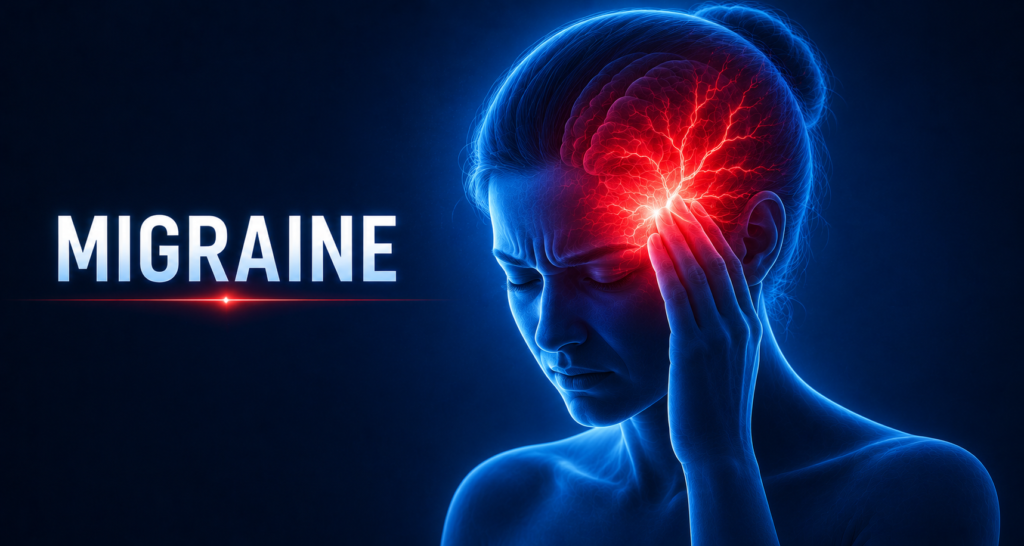
Migraine

Migraine is a common neurological condition that causes recurring episodes of moderate to severe headache, often affecting one side of the head. It is more than just a headache and may interfere with daily activities, work, and quality of life. Migraines can last for several hours to several days and may be triggered by factors such as stress, lack of sleep, certain foods, hormonal changes, or bright lights.

Common Symptoms of Migraine

Migraine symptoms can vary from person to person and may include:

• Throbbing or pulsating headache, often on one side of the head
• Sensitivity to light, sound, or strong smells
• Nausea and vomiting
• Dizziness or blurred vision
• Visual disturbances such as flashing lights or zigzag lines (aura) in some individuals

Symptoms often worsen with physical activity and may significantly affect daily functioning.

Treatment of Migraine

Treatment aims to relieve symptoms and reduce the frequency of attacks.

• Medications may be prescribed to stop a migraine attack or prevent future episodes.
• Resting in a quiet, dark room can help during an attack.
• Identifying and avoiding personal triggers is an important part of management.
• Patients with frequent migraines may benefit from preventive therapies and lifestyle modifications.

Can Migraines Be Prevented?

Many people can reduce migraine attacks by making simple lifestyle changes:

• Maintain a regular sleep schedule
• Stay well hydrated
• Manage stress effectively
• Avoid known food or environmental triggers
• Eat regular meals and avoid skipping them
• Exercise regularly and maintain a healthy lifestyle

Key Message

Migraine is a treatable neurological condition. Early diagnosis, trigger management, and appropriate treatment can help reduce attacks and improve quality of life.

Scroll to Top