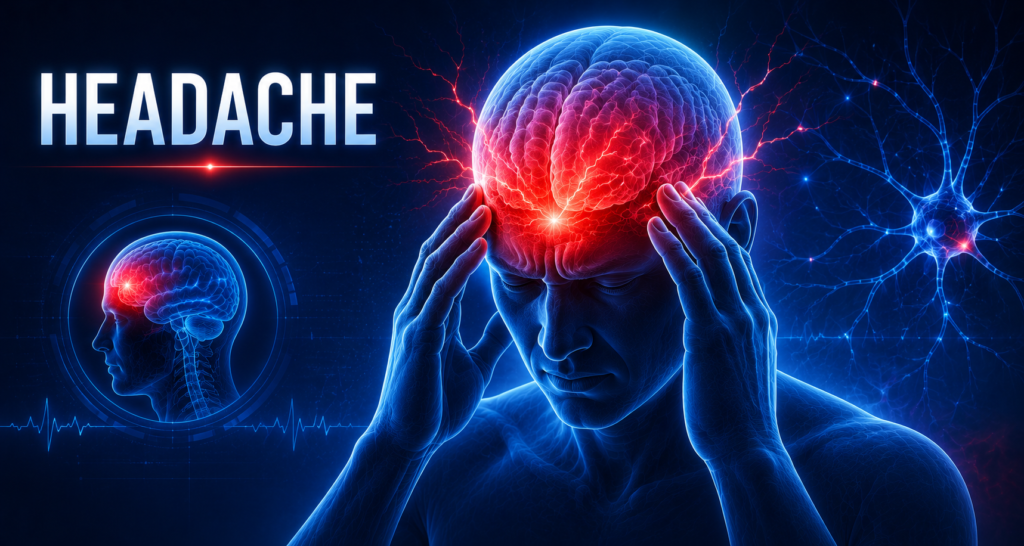
Headache

A headache is one of the most common neurological symptoms and can range from mild discomfort to severe pain. While most headaches are not serious and may be caused by stress, lack of sleep, dehydration, or eye strain, some headaches can be a sign of an underlying medical condition that requires attention.

Common Symptoms of Headache

Headaches can present in different ways, including:

• Dull, aching pain or a feeling of pressure in the head
• Throbbing or pulsating pain
• Pain on one or both sides of the head
• Sensitivity to light or sound
• Nausea or dizziness in some cases

Seek immediate medical attention if a headache is:
• Sudden and severe (“the worst headache of your life”)
• Associated with weakness, numbness, or difficulty speaking
• Accompanied by fever, confusion, or loss of consciousness
• Following a head injury

Treatment of Headache

Treatment depends on the underlying cause.

• Adequate rest, hydration, and stress management may help relieve common headaches.
• Medications may be prescribed for pain relief or to treat specific headache disorders.
• Identifying and avoiding triggers can help prevent recurring headaches.
• Persistent or frequent headaches may require neurological evaluation and further investigations.

Can Headaches Be Prevented?

Many headaches can be reduced by adopting healthy lifestyle habits:

• Maintain regular sleep patterns
• Stay well hydrated
• Manage stress effectively
• Avoid skipping meals
• Limit excessive screen time
• Exercise regularly

Key Message

Most headaches are harmless, but frequent, severe, or unusual headaches should never be ignored. Early evaluation can help identify the cause and ensure appropriate treatment.

Scroll to Top