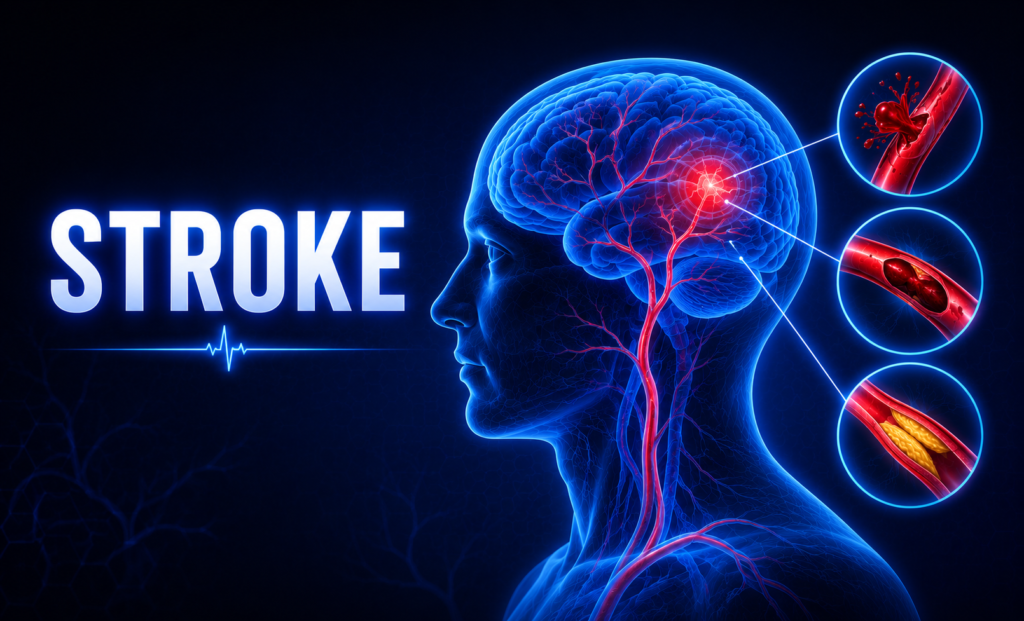
STROKE

A stroke occurs when the blood supply to a part of the brain is suddenly interrupted, either due to a blocked blood vessel (ischemic stroke) or bleeding in the brain (hemorrhagic stroke). Without adequate blood flow, brain cells begin to die within minutes, making stroke a medical emergency.

Common Symptoms of Stroke

Stroke symptoms usually appear suddenly and may include:

• Weakness or numbness of the face, arm, or leg, especially on one side of the body
• Slurred speech or difficulty understanding speech
• Sudden loss of vision in one or both eyes
• Dizziness, loss of balance, or difficulty walking
• Severe headache with no obvious cause

Remember F.A.S.T.:

  • Face drooping
  • Arm weakness
  • Speech difficulty
  • Time to seek emergency medical care


Treatment of Stroke

The treatment depends on the type of stroke and how quickly medical attention is received.

Ischemic strokes may be treated with clot-dissolving medications or clot-removal procedures.
Hemorrhagic strokes require control of bleeding, blood pressure management, and sometimes surgery.

Early treatment can significantly improve recovery and reduce disability.

Can Stroke Be Prevented?

Many strokes can be prevented by controlling risk factors such as:

• High blood pressure
• Diabetes and high cholesterol
• Smoking and excessive alcohol consumption
• Obesity and lack of physical activity

Regular health check-ups, a healthy diet, exercise, and timely treatment of medical conditions can greatly reduce the risk of stroke.

Key Message

Stroke is a medical emergency. Recognizing the symptoms early and seeking immediate treatment can save brain function, reduce disability, and save lives.

Scroll to Top